safety seat belt Belt for Maximum Protection
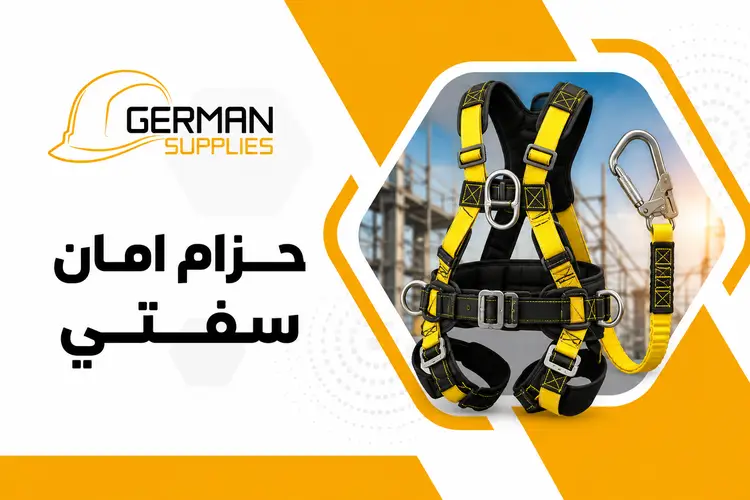
In high-altitude work environments, such as scaffolding, electrical towers, and building facades, the choice of protective equipment can be a critical factor in preventing accidents. Therefore, selecting a full-body safety seat belt is not only about complementing personal protective equipment, but also represents an essential part of the responsibility of project managers and occupational health and safety (HSE) officers to protect workers and comply with safety requirements.
In this guide from German Supplies, we review the most important technical criteria for choosing a safety seat belt for heights, explaining the types of approved harnesses and how to choose the most suitable one for the nature of the work, along with instructions on obtaining the original product that meets specifications.
Instant comparison table of safety belt types
|
Belt type |
Basic use |
Suspension points (D-Rings) |
related standard |
|
Full-Body Arrest Safety Belt |
Protection from falls while working on scaffolding, facades and towers. |
A basic back point, with a breast point in some designs. |
EN 361 / ANSI Z359.11 |
|
Work Positioning Belt |
Restraining the worker while performing tasks that require the free use of both hands, such as tower and pole maintenance work. |
Two side points at the waist. |
EN 358 / ANSI A10.32 |
|
Suspension belt and work suspension |
Supporting the worker during the execution of suspended tasks for extended periods, such as facade cleaning and rope access work. |
Mid-abdominal point (Ventral D-Ring) with points at the waist. |
EN 813 |
|
Confined Space/Rescue Belt |
Lifting and evacuating workers from confined spaces such as tanks, silos and septic tanks. |
Shoulder points for lifting and rescue with a dorsal point. |
IN 1497 |
Non-negotiable technical standards in safety belts
When choosing fall protection equipment, the quality of a safety seat belt for heights depends not only on appearance or price, but also on the precision of its design, the quality of its components, and its ability to withstand sudden impact forces. Therefore, understanding these technical components helps occupational health and safety (HSE) officers and project managers select certified and reliable equipment capable of providing the required protection and withstanding various working conditions. Contact us for more information on equipping workers with a high Safety Vest Egypt standard that withstands the toughest conditions.
Product review and integrated system
When dealing with fall protection equipment, the quality of a height safety seat belt is not measured solely by appearance or price, but also by the accuracy of its design, the quality of its components, and its ability to withstand sudden impact forces. Therefore, understanding these components helps occupational health and safety (HSE) officers and project managers to select a certified safety seat belt suitable for the working conditions.
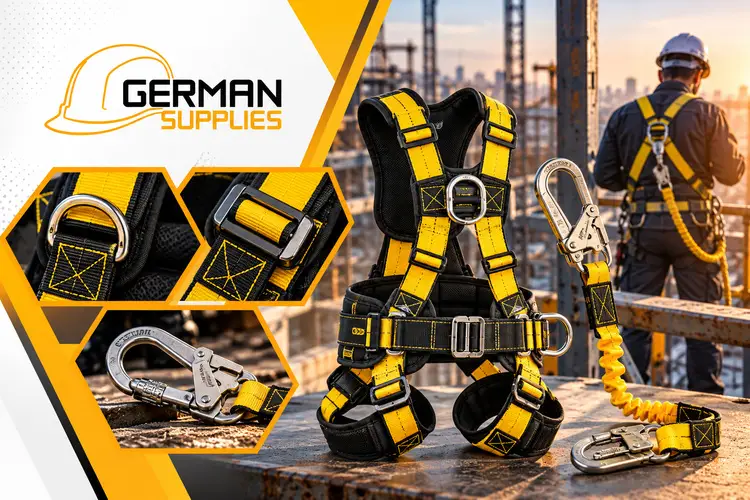
- Mounting points (D-Rings) The fastening loops are among the most important components of a safety seat belt, and their location and function vary depending on the nature of the work. The dorsal loop is located between the shoulders and is primarily used for attachment to fall arrest systems, while the thoracic loop is used in some climbing and rescue systems. The lateral loops are usually used to define the work position and should not be used for fall arrest unless the system is specifically designed and certified for that purpose.
- Webbing and sewing tapes The webbing in any safety seat belt designed for working at heights is made from highly durable synthetic fibers, such as polyester or polyamide, with a design that provides adequate resistance to tension, abrasion, and environmental factors. Reinforced stitching at connection points helps maintain the belt's strength, while the use of contrasting threads facilitates visual inspection and detection of signs of wear or tear.
- Buckles and fasteners Buckles help secure and adjust the safety seat belt to fit the worker's body, which is essential for a proper fit during use. Various designs are available, including quick-release buckles that facilitate putting on and adjusting the belt, and traditional buckles that rely on manually sliding and adjusting the straps. It is recommended to choose the design based on the nature of the work and ease of use, always adhering to the manufacturer's instructions and the correct fastening method.
Safety Officer's Guide (HSE Checklist): How do you periodically check the safety of the seatbelt?
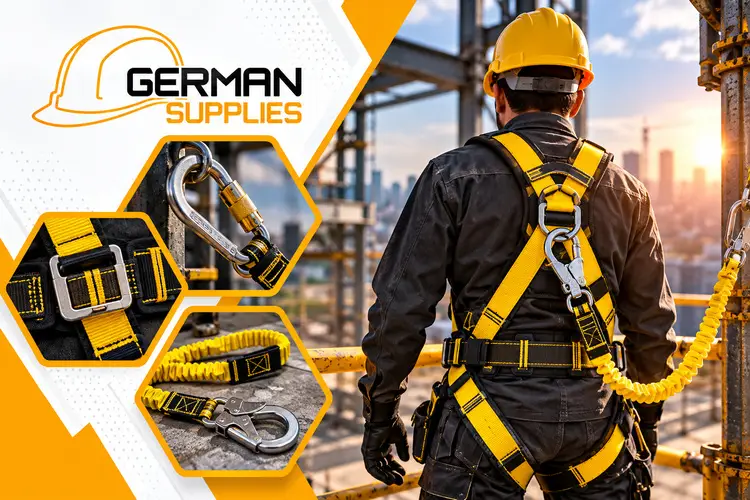
Regularly inspecting your safety seat belt is not just a routine procedure, but a crucial step to ensure your fall protection equipment is ready. Therefore, it is recommended to visually inspect the safety seat belt before each use, in addition to a more thorough periodic inspection as per the manufacturer's instructions and site requirements.
Steps to check the safety belt
- Inspection of the tapes and stitching: Ensure the straps are free from cuts, fraying, burns, chemical residue, or damage from environmental factors. Also, inspect the stitching areas for broken threads or damaged stitches.
- Checking the rings and buckles: Inspect the D-rings and metal parts for rust, cracks, or warping. Also, ensure the buckles function and close correctly.
- Data card review: Check the clarity of the belt data, including the serial number, conformity marks, and any other information that identifies the product and its usage requirements.
When should a safety belt be removed?
When should a safety belt be removed?
A safety seat belt must be stopped immediately if it shows significant signs of damage, such as cuts, burns, or severe wear on the straps, cracks or deformities in the metal parts, or damage to the buckles. The harness must also be removed from service after a fall, even if no visible damage is present, and the manufacturer's inspection and replacement instructions should be followed.
If it is not possible to verify the belt's identity or read its basic data, it is best not to use it until its validity has been assessed according to approved procedures.
At German Supplies, we ensure that fall protection equipment is provided along with product data and certifications, and we offer technical support to help procurement and HSE personnel select the right equipment for their specific job and site requirements. We also offer products such as Safety Vest for Engineers and protective gear conforming to the specifications and standards set by the manufacturer, which helps to implement safety procedures more reliably.
UlUltimately, the choice of a safety seat belt remains Safety helmet price seat belt that conforms to approved specifications and standards is an essential step to reduce the risk of falls and protect workers at high locations. The use of appropriate protective equipment also contributes to supporting safety procedures and maintaining efficient work continuity.
German Supplies provides a complete range of safety seat belt models and fall protection equipment, with product inspection and conformity certificates, along with technical support to help safety and procurement officers select the appropriate equipment for the nature of each project.
Contact the German Supplies team for technical advice and to equip your site with the appropriate safety seat belt and protective equipment for your work requirements and safety standards.
Frequently Asked Questions
What is the difference between a waist belt and a full-body height belt?
A work positioning belt is designed to secure and fix a worker in position during work, such as maintaining power lines, and is not used as a standalone fall prevention system. A full-body safety harness, on the other hand, covers the shoulders, chest, and thighs and is used in conjunction with fall prevention systems designed for this purpose to distribute the impact force of a fall to the appropriate body areas.
What is the recommended default duration for using a safety belt?
There is no single lifespan that applies to all belts; the usage period varies depending on the manufacturer, storage and usage conditions, and the condition of the belt. Therefore, the period specified in the product instructions should be adhered to, and periodic inspections should be carried out. The belt should be immediately removed from service if it has been dropped, stopped, or shows signs of damage or wear, regardless of its age.
Does German Supply provide certificates of conformity with every supply order?
Yes, German Supplies provides the documentation and certificates of conformity according to the specifications and standards set for safety harnesses, such as EN and ANSI standards, which helps safety and procurement officials to document equipment and verify its suitability for site requirements.