Best Safety Boots: How to Choose Durable Work Boots for 2026
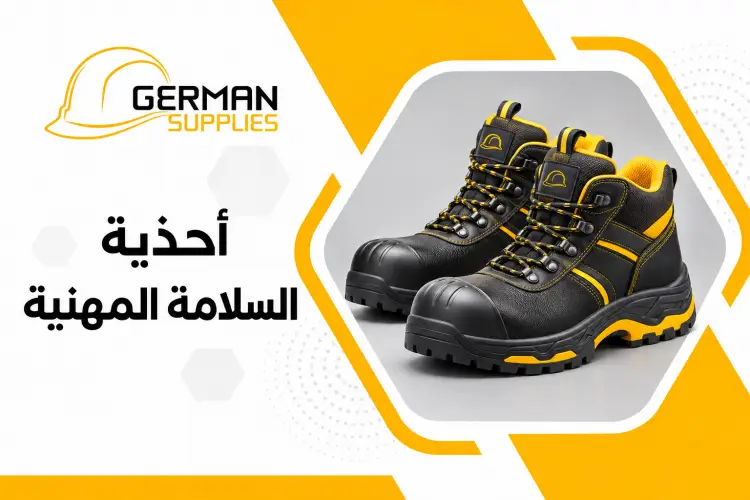
Protecting workers in industrial and construction environments starts with selecting the right safety equipment—first and foremost, best safety boots. They form a vital protective barrier against foot injuries and slip accidents, which can lead to severe physical harm, productivity losses, and increased costs related to absenteeism and compensation.
Therefore, choosing best safety boots that strictly comply with international standards and specifications is not merely about protecting workers from mechanical and electrical hazards. It also contributes directly to improving work efficiency by offering superior comfort through ergonomic design, reducing pressure on the feet throughout long working hours.
In this comprehensive guide, German Supplies provides all the technical specifications and criteria you need to choose the best safety boots, helping you minimize site risks and enhance occupational compliance.
What Are Occupational Safety Boots and Why Are They a Mandatory Investment?
An occupational safety boot is a fundamental piece of Personal Protective Equipment (PPE) specifically engineered to protect feet from mechanical and environmental hazards across various job sites—such as factories, construction zones, oil fields, and laboratories.
Unlike traditional footwear, best safety boots undergo rigorous standardized testing and feature advanced protective elements, including:
- Toe Cap Protection: Manufactured from steel or composite materials, serving as a protective shield for toes against severe impacts and heavy falling objects.
- Slip and Penetration-Resistant Soles: Delivers firm grip and stability on wet or oil-contaminated surfaces, while safeguarding the soles of feet from sharp objects such as nails and glass fragments.
- Electrical Hazard and Electrostatic Discharge Protection (ESD/EH): Mitigates the risks of electric shocks and static electricity buildup, offering precise protection tailored to specific operational environments.
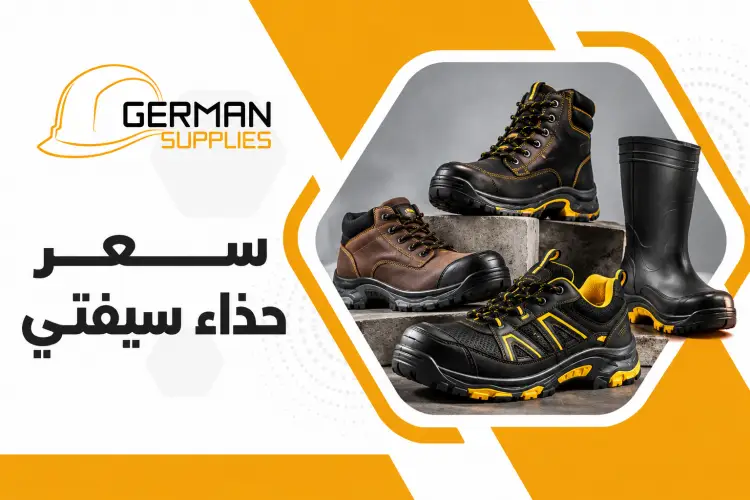
For more useful information and practical guidance, explore our article on price of safety shoes.
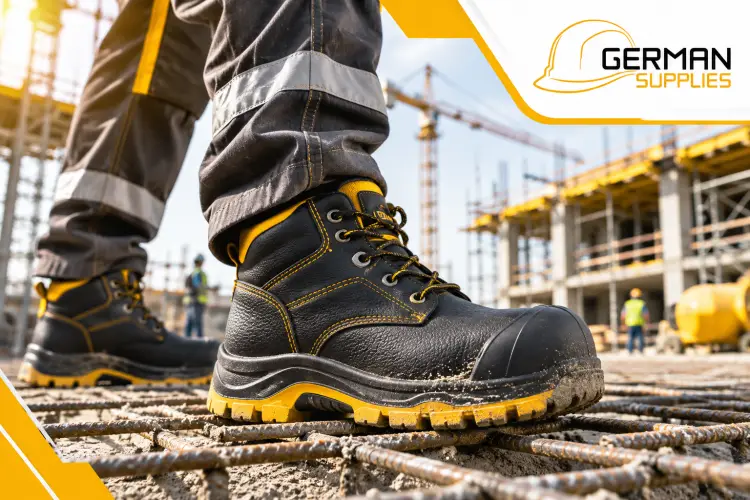
How Do Safety Boot Specifications Meet Tender and Corporate Quotation Requirements?
When supplying best safety boots for construction sites and industrial facilities, German Supplies focuses on full compliance with technical requirements and safety benchmarks through:
- RFQ & Tender Specification Analysis: Detailed line-by-line review of technical requirements for every project.
- Selecting Exact Ratings: Supplying boots with ratings like S3 or S7 for water and puncture resistance, or ESD/EH for environments requiring specific electrical properties.
- Ensuring Certified Safety Standards: Verifying that all footwear adheres strictly to international testing standards, such as EN ISO 20345:2022.
- Providing Complete Technical Files: Attaching Data Sheets, Certificates of Origin, and inspection/testing certificates alongside commercial quotations.
- Streamlining Consultant Approval: Delivering all documentation required for swift review and approval by project consultants and HSE officers.
- Offering Physical Samples: Providing sample units for inspection and field testing prior to final contract execution.
The technical team at German Supplies is always available to analyze on-site hazards and assist you in selecting the ideal models aligned with European standards (such as S1P, S3, and ESD), achieving the perfect balance between required protection and cost-efficiency.
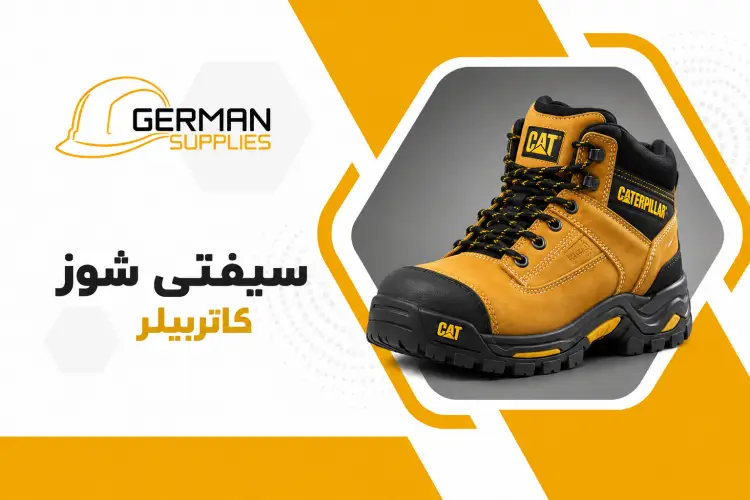
Discover additional insights into workplace safety and protection by reading caterpillar-safety-shoes.
How to Select the Best Safety Boots Based on Your Work Sector
Selecting the best safety boots depends heavily on the specific hazards present in each industry, rather than general material quality alone. German Supplies helps you identify exact specifications to deliver maximum return on investment for your workforce.
1. Construction and Building Sector
Construction sites involve daily hazards, including sharp debris, heavy falling loads, and uneven, slippery surfaces.
- Recommended Rating: S3 or S7.
- Key Features: Steel or Composite toe caps, puncture-resistant steel/armored midsoles, and durable water-resistant, tear-proof uppers built for demanding environments.
2. Oil & Gas Sector
Oilfields require high slip resistance and static charge control, particularly in hazardous areas containing flammable materials.
- Recommended Rating: S3 or S5 with ESD properties.
- Key Features: Oil and chemical-resistant outsoles, high slip resistance, and antistatic properties tailored to site regulations. Options like Safety shoes CAT Egypt are frequently sought after in these heavy-duty sectors for their proven durability.
3. Food Industry & Medical Facilities
Designed for personnel working across both administrative and field areas, prioritizing ease of cleaning and hygiene along with ergonomic support for long shifts.
- Recommended Rating: S1P or S2 depending on risk assessment.
- Key Features: Washable/sanitizable materials, non-marking anti-slip soles, and lightweight designs. For specialized needs or female staff, dedicated models such as Safety shoes girl lines offer tailored ergonomic fits without sacrificing protection.
4. Electrical & Energy Sector
Electrical tasks demand footwear chosen according to actual electrical risk levels and certified site safety mandates.
- Recommended Rating: Electrical Hazard (EH) rated safety footwear where specified.
- Key Features: Non-metallic Composite Toe caps providing impact resistance alongside non-conductive insulating properties for maximum electrical safety.
Send your project requirements or work environment details to German Supplies, and our consultants will recommend the exact models while providing all required technical data sheets and certificates.
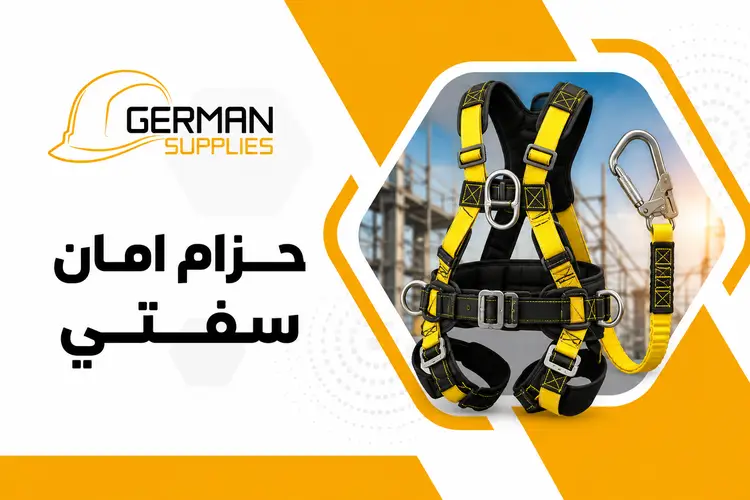
You can also find helpful tips and recommendations in our detailed guide on safety seat belt.
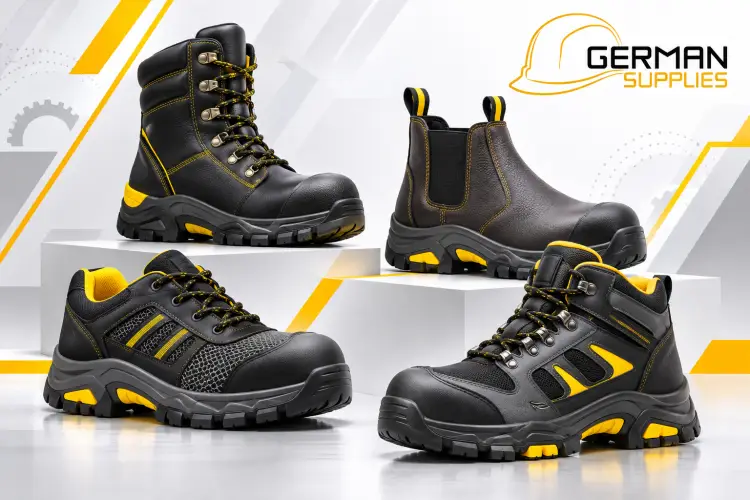
Quick Comparison: Steel Toe vs. Composite Toe
The protective toe cap is one of the most vital components of the best safety boots. Both options comply with EN ISO 20345 standards to safeguard toes against impact and compression.
If your work requires walking long distances or frequently passing through security metal detectors, composite toe caps are a practical, lightweight, metal-free choice. Here is a quick breakdown:
|
Comparison Point |
Steel Toe Cap |
Composite Toe Cap |
|
Material |
Treated steel engineered for maximum compression |
Non-metallic materials (Fiberglass, Carbon Fiber, Polymers) |
|
Weight |
Relatively heavier |
Lightweight |
|
Metal Detectors |
May trigger security alarms |
100% Metal-free; seamless pass-through |
|
Thermal Insulation |
Conducts heat and cold |
Provides superior thermal insulation |
|
Electrical Safety |
Contains conductive metal |
Excellent choice for dielectric / non-conductive needs |
|
Profile & Design |
Sleek and compact profile |
Slightly bulkier cap design |
|
Cost |
Generally more economical |
Generally higher price point |
Whether you are procuring Best safety boots for men working in rugged heavy construction or selecting lightweight composite footwear for security-restricted facilities, German Supplies ensures every pair is fully certified for the job.
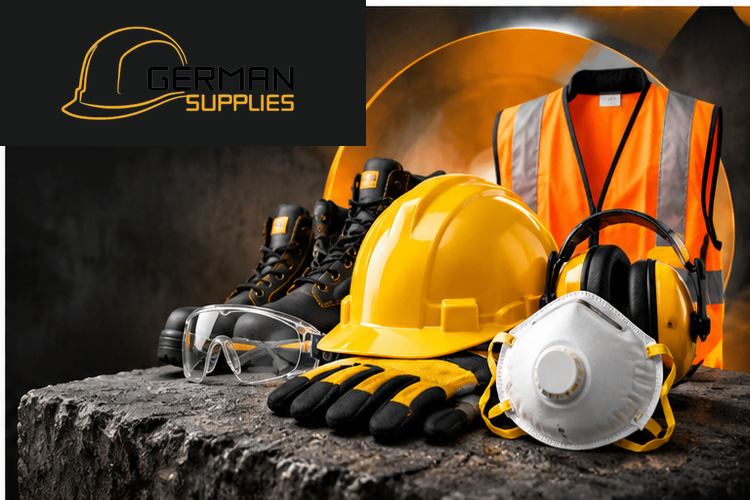
To expand your knowledge of industrial safety equipment and workplace protection, check out personal protective equipment ppe.
Why Do Companies Rely on German Supplies for Safety Footwear Procurement?
In complex industrial and building projects, companies require a specialized supply partner capable of delivering high-performance footwear on time and within budget. German Supplies offers end-to-end service including:
- Technical Compliance Verification: Aligning models with EN ISO 20345 specifications and local project regulations.
- Transparent Documentation: Providing comprehensive technical submittal packages containing Data Sheets and test certificates for easy consultant approval.
- Bulk Order Fulfillment: Meeting high-volume inventory demands for major industrial plants and infrastructure projects.
- Corporate Pricing Structure: Delivering competitive wholesale pricing for tenders, long-term contracts, and corporate orders across Safety Boots Egypt supply chains.
- Pre-Sales Technical Consultation: Assisting procurement and HSE teams in specifying exact parameters (S1P, S3, ESD, Metal-Free) based on site risk matrices.
Reach out to German Supplies today with your project specifications or quantity requirements to receive a customized technical study and commercial proposal for the best safety boots.
Frequently Asked Questions (FAQ)
What is the average lifespan of safety boots?
Typically, safety boots last between 6 to 12 months under daily operational use. However, they must be replaced immediately if there is visible damage, severe outsole wear, or after sustaining a heavy impact.
How do I verify that safety boots are genuine and compliant?
You can verify authenticity and compliance by checking for:
- Clear EN ISO 20345 certification markings stamped on the footwear label.
- Manufacturer Data Sheets and accredited test certificates.
- High manufacturing quality, intact sole bonding, and flawless finish.
- Clear manufacturer branding and Certificate of Origin.
Do ergonomic safety boots help relieve back pain?
An ergonomic design in best safety boots significantly reduces foot fatigue and joint strain during long working shifts, especially when featuring good shock absorption, proper arch support, and light overall weight. However, while they reduce strain, safety boots are not a medical cure for underlying back conditions.